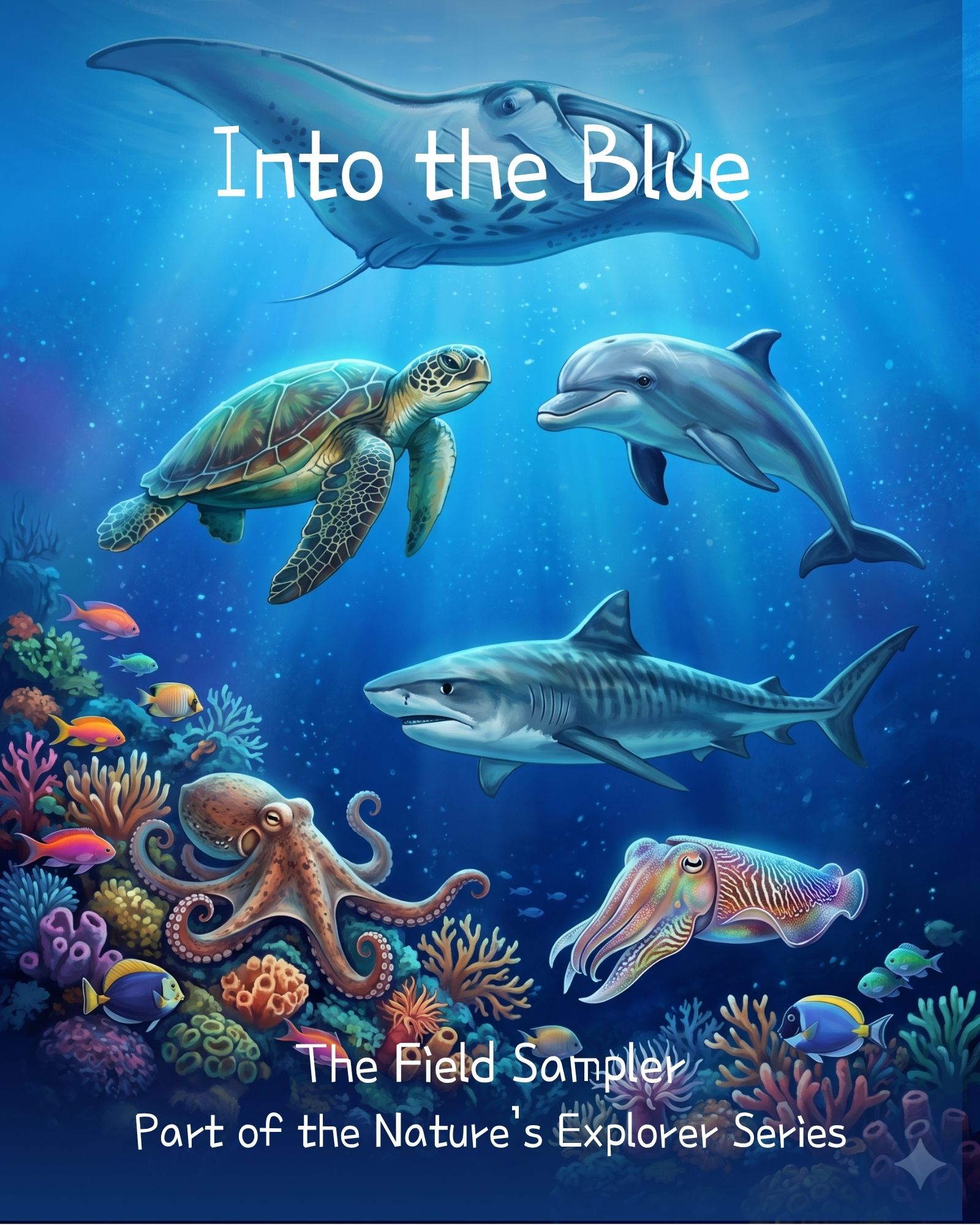
Into the Blue

A cuttlefish is completely colorblind.

It also produces the most sophisticated camouflage on the planet. Scientists still aren't sure how.

Buy on Amazon
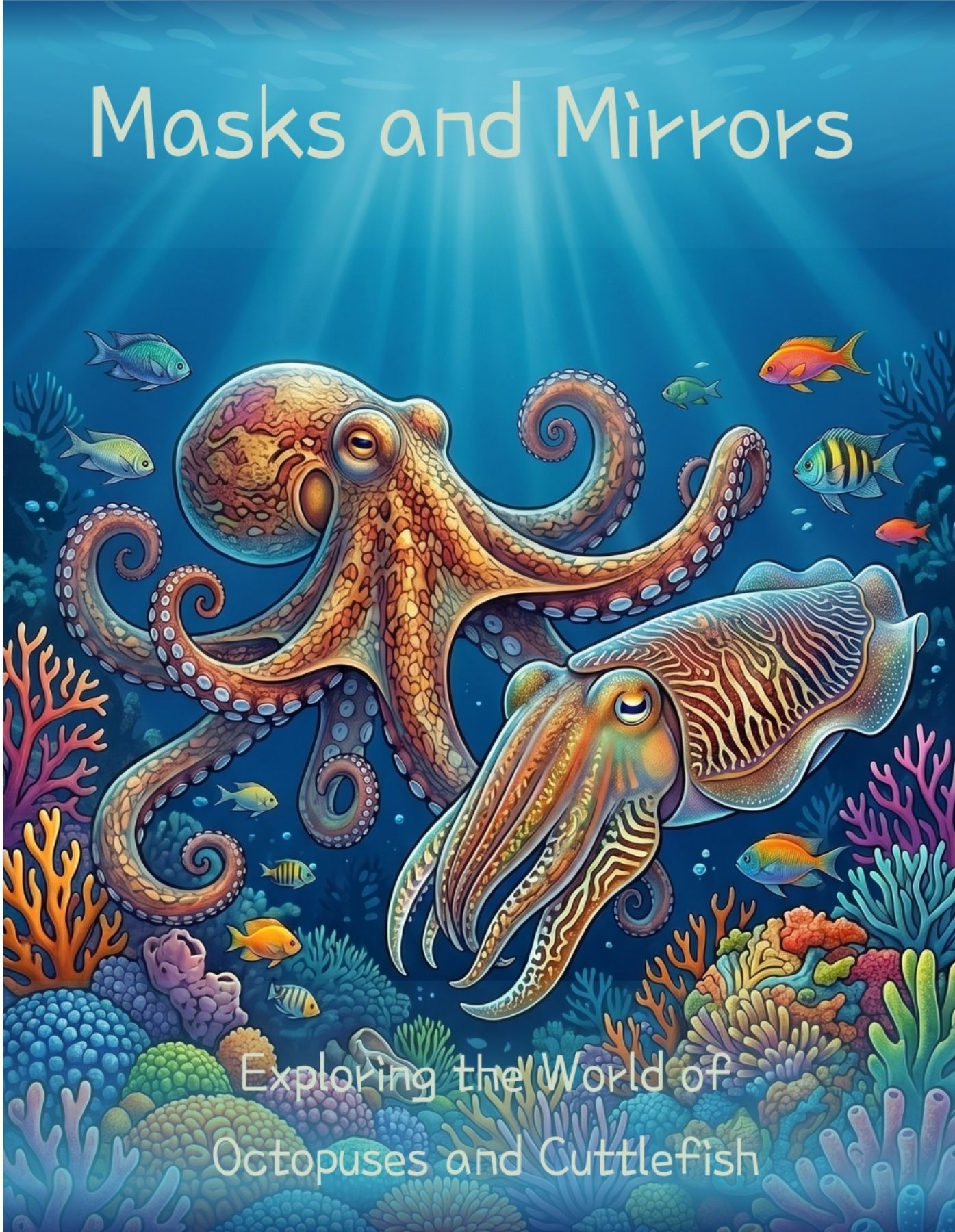
Masks and Mirrors book cover
Masks and Mirrors

Exploring the World of Octopuses and Cuttlefish

What if you could taste with your fingertips? Change the color of your skin in half a second? Squeeze your entire body through a hole the size of a quarter? Octopuses do all of that before breakfast.

And then there's the cuttlefish - completely colorblind, yet producing the most sophisticated color displays in the animal kingdom. Scientists still aren't sure how. Or why. But they can't look away.

Neither will you.

Did you know?

Octopus and cuttlefish facts worth stopping for.

Two-thirds of an octopus's brain is in its arms.

Each arm contains roughly 40 million neurons arranged in clusters, capable of tasting, touching, and reacting independently - without waiting for instructions from the central brain. Nothing quite like it exists anywhere else in the animal kingdom.

Octopuses plan ahead.

They collect and arrange shells, rocks, and debris to build barriers at den entrances - a behavior that requires evaluating a material, judging its usefulness, carrying it considerable distances, and placing it correctly. All of that in a brain the size of a grapefruit.

The passing cloud display freezes prey in place.

Rolling waves of light and dark across a cuttlefish's body trigger a freeze response in small crustaceans - exploiting their hardwired reaction to flickering light. The cuttlefish uses the frozen moment to position itself for maximum accuracy.

Cuttlefish tentacles fire in under 15 milliseconds.

Before the tentacles leave the pocket, a cuttlefish has already calculated the precise trajectory needed to intercept moving prey, accounting for water resistance and the prey's direction of travel.

From inside the book

A writing prompt that earns it.

The Thinking Pause - Researchers have documented octopuses stopping completely before attempting a new problem, appearing to reason through the challenge before acting. Unlike most animals that learn through repeated trial and error, octopuses often solve problems on the first or second try. You are an octopus who has just encountered something you have never seen before. Describe what you observe, how you think through it, and what you decide to do. What does it feel like to solve something entirely on your own?

One of 16 writing prompts inside - each launched by a fact that makes you stop.

Four ways in

Every kind of kid finds a way in.

Masks and Mirrors opens with field-guide facts on octopuses and cuttlefish - their biology, intelligence, camouflage, and behavior. Then come original stories: Ivy the octopus reasoning her way through a problem no one taught her to solve, and Lyra the cuttlefish hunting across a bay floor with a patience that takes most animals a lifetime to develop. Did You Know boxes woven into each story at the exact moment they land hardest. Sixteen writing prompts, word searches and crosswords, and coloring pages throughout. There's something in here for every kind of reader - and no wrong way through any of it.

Buy on Amazon
Into the Blue

Collect the series.

Every title in the Into the Blue series stands alone. Any one is a good first book. But they're built to be collected.

Back to Into the Blue